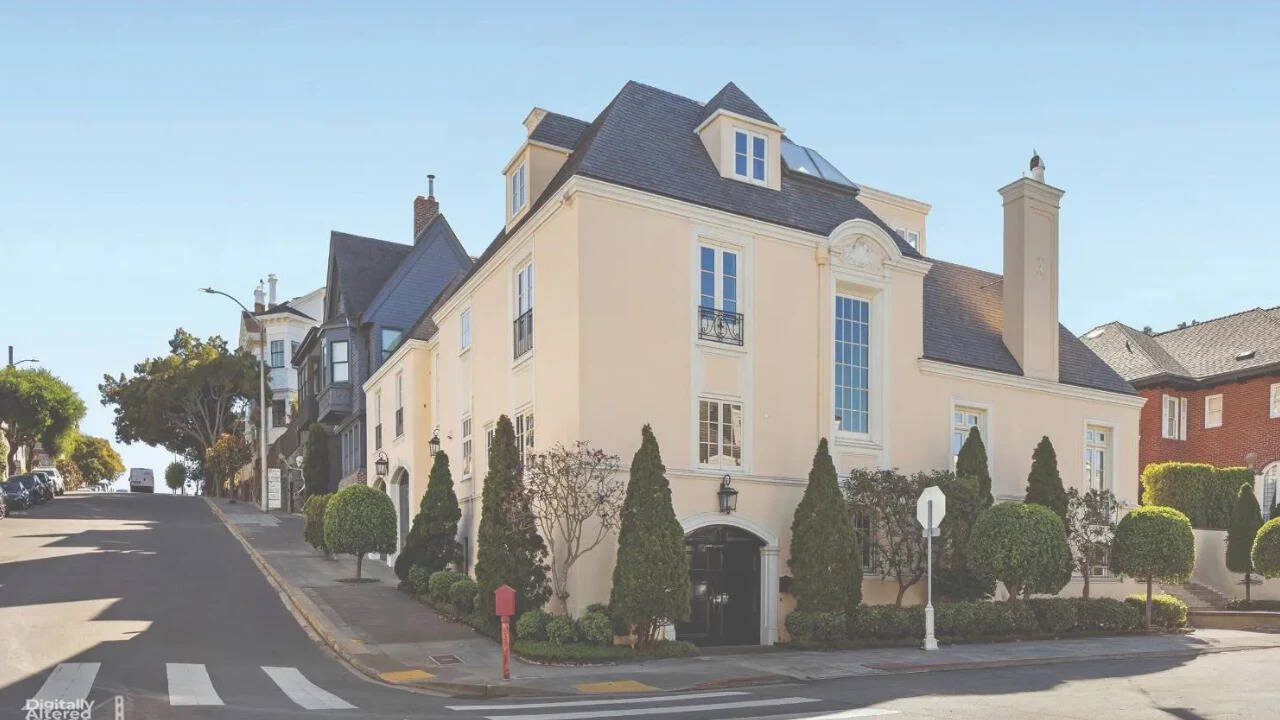
Flipping an ultra-luxury house in five months sounds like a textbook real estate gamble, especially in a city famous for steep transfer taxes and slow trophy sales. Yet a five-bedroom residence at 3501 Jackson Street in San Francisco's Presidio Heights just pulled off that exact trick—selling for $24 million in November 2026 after trading off-market for $21 million in June.
Most coverage stops at the headline spread: a $3 million jump in price, roughly $2,990 per square foot up from about $2,620 five months earlier, after a light refresh. That misses the real story. This wasn't a greedy speculator trying to squeeze a quick profit out of a makeover. The owner bought the home in June, put in modest updates, and listed it on November 6 at $19.9 million only because another property they'd been eyeing for roughly 15 years finally came open. Three days later, on November 9, they had an accepted bid. By November 17, the deal closed—just eleven days after hitting the market.
If you're watching the upper tier of San Francisco housing, this sale tells you more about how the market actually works right now than any monthly median chart. Trophy homes aren't moving like ordinary listings. They're moving on scarcity, speed, and all-cash conviction.
How a Five-Month Turnaround Actually Played Out
In everyday real estate, a five-month hold is a red flag. People wonder what's wrong with the house or why someone bailed so fast. At the $20 million-plus mark in Presidio Heights, the math and motives look completely different.
According to Compass agent Nina Hatvany—who represented both sides of the transaction and co-listed the home with Paul Kitchen—the seller wasn't running a classic flip factory. A dream property the owner had tracked for about 15 years became available, forcing a fast decision. Selling the Jackson Street mansion was the move that unlocked it.
Look at the timeline and the numbers behind it:
- June 2026 purchase: Bought off-market for $21 million (around $2,620 per square foot).
- All-in entry cost: Factoring in transfer taxes and commissions, the June buyers were already sitting near $22 million before touching a paintbrush.
- Makeover and carry: Estimated upgrades brought total basis up to roughly $22.25 million.
- November 6 relisting: Hit the market asking $19.9 million—a classic under-pricing strategy designed to pull serious buyers off the sidelines fast.
- November 9 & November 17: Offer accepted in three days; closed in eleven days at $24 million (roughly $2,990 per square foot), leaving about $1.75 million ahead of selling commissions.
That $1.75 million cushion before brokerage fees is the part that surprises people most. In a high-tax city, a light refresh rarely leaves room for error. The only reason it worked here is that the broader luxury tier rose underneath the seller's feet between June and November—and the under-$20 million list price sparked an immediate dogfight that pushed the closing price more than $4 million past the asking price.
What Makes 3501 Jackson Street Different From a Typical Flip
You can't slap fresh paint and new light fixtures on an average house and collect $2,990 a square foot in Presidio Heights. Buyers at that level are paying for bones, scale, and location that can't be replicated on a smaller lot.
Built in 1922, the property spans roughly 8,000 square feet across four levels, sitting one block from the Presidio's 1,500 acres of parkland. The layout leans hard into formal entertaining and private separation:
- Five bedrooms and 5.5 bathrooms, with the primary suite occupying its own wing and four additional bedrooms spread across other levels so guests and family aren't stacked on top of one another.
- Main-level volume, starting with a living room scaled like a ballroom, arched doorways, a formal dining room, and a library.
- Indoor-outdoor flow, where a rear chef's kitchen opens to a family room and French doors step out to limestone terraces, a fountain courtyard, and a raised dining pavilion.
- Lower-level extras and access, including a home theater, refrigerated wine cellar, an elevator serving all four levels, and side-by-side parking in a two-car garage.
Crucially, the 1922 millwork and mouldings were preserved rather than gutted. Honestly, that's what separates smart preservation from expensive over-renovation in historic San Francisco neighborhoods. Tear out original period woodwork chasing a trendy look, and you can alienate buyers who specifically want heritage character. Keep the craft intact and sharpen the finishes around it, and you protect both speed and resale appeal.
Why Luxury Bidding Wars Are Flipping San Francisco's Script
For years, conventional wisdom in San Francisco real estate said starter homes saw fierce bidding wars while luxury properties lingered and invited discounts. In fall 2026, that script flipped upside down.
Analysis from Compass economists Mike Simonsen and Janel Evans-Anderson, covered by The Real Deal, pointed out that this fall reversed the usual pattern—with luxury buyers competing aggressively when rare supply hit the market. Citywide figures from autumn 2026 back up how tight conditions got:
- Thin inventory: Only 222 active single-family listings in October 2026—down 20% year-over-year—equating to 0.9 months of supply and an average of 14 days on market.
- Over-asking momentum: In September 2026, nearly 92% of city sales closed over asking, with homes above the median averaging 134% of list price, while luxury sales above $5 million jumped 109% in the first nine months of 2026 compared to the same stretch in 2025.
- Cash and skipped appraisals: Title records cited by The San Francisco Standard showed roughly one in three San Francisco home sales between January 1 and September 1, 2026, were all-cash—giving well-capitalized buyers the ability to waive appraisal contingencies and close fast.
Across Presidio Heights and nearby north-side enclaves in fall 2026, pricing below $20 million—or well below perceived value—became a deliberate magnet for competing offers. Consider a few other high-profile sales tracked across the neighborhood and adjacent blocks during 2026:
- 20 Cherry Street (eight bedrooms, 10,444 square feet): Listed at $18.5 million in early October and closed October 22 at $28.5 million—a $10 million overbid (about 54% above asking) reported by The San Francisco Chronicle as a city record for dollar amount over list price.
- 3460 Clay Street (six bedrooms, 5,230 square feet): Listed at $11 million and closed in September at $14.7 million (about $2,811 per square foot).
- 120 Cherry Street (five bedrooms, 6,174 square feet): Listed at $14 million and closed in mid-October at $17.15 million (roughly $2,780 per square foot).
- 3385 Jackson Street (five bedrooms, 6,835 square feet): Closed November 12 at $18.75 million, right at asking.
That contrast between 3385 Jackson closing at asking and 3501 Jackson jumping more than $4 million over its $19.9 million list price is a reminder that overbidding is a function of list-price strategy and scarcity, not an automatic guarantee that every mansion on the block will clear list by 20% or 50%. Still, when a turnkey, full-scale Presidio Heights house hits under $20 million in a sub-one-month-supply market, buyers with cash move before talking themselves out of it.
Taxes, Politics, and the Catch Nobody Talks About
If you look at this deal and think short-hold luxury flips are easy money, stop and run the tax and policy math first. San Francisco's transaction costs are brutal, and they're a major part of why five-month turnarounds remain rare even in a hot market.
On the Jackson Street deal, transfer taxes and commissions pushed the June buyers' effective cost close to $22 million before renovation expenses. Add another round of selling costs on the exit, and a modest price bump can get eaten alive fast.
Meanwhile, real estate taxation in San Francisco has been actively contested in late 2026. Voters in November 2026 approved Proposition J (effective March 1, 2027), expanding transfer tax reach to certain lender foreclosures and deeds in lieu based on fair market value rather than credit bids, as outlined in legal alerts from Greenberg Traurig. At the same time, city officials have debated trimming transfer tax rates on large property sales to help unstick stalled housing development, as reported by Mission Local.
Here's the honest takeaway: nobody should treat a five-month luxury resale as a low-risk playbook. Most short-term resales in high-transfer-tax cities get chewed up by closing costs, holding expenses, and shifting tax rules. This one worked because a rare trophy asset, a fast personal pivot to another long-sought property, low supply, and an aggressive under-$20 million launch collided at the exact right moment.
Practical Next Steps If You're Buying or Selling High-End Property
Whether you're tracking Presidio Heights or sizing up another tight luxury market, a few practical moves will keep you grounded:
- Calculate all-in friction before pricing or bidding. Factor transfer taxes, escrow/title fees, commissions, holding costs, and realistic contractor overruns into your net number—not just the spread between purchase price and headline sale price.
- Treat list prices as bait in low-inventory pockets. When active inventory is tight and homes are moving in under two weeks, a sub-$20 million or discounted asking price often acts like an auction opening bid rather than a ceiling.
- Verify true comps instead of chasing headline overbids. Compare closed price per square foot, lot scale, renovation depth, and architectural preservation across similar homes—not just the loudest percentage over asking.
- Check upcoming tax and transfer rules early. If you're buying, selling, or restructuring ownership through an LLC or trust, confirm local transfer tax effective dates and exemption limits with a local real estate attorney or CPA before signing.