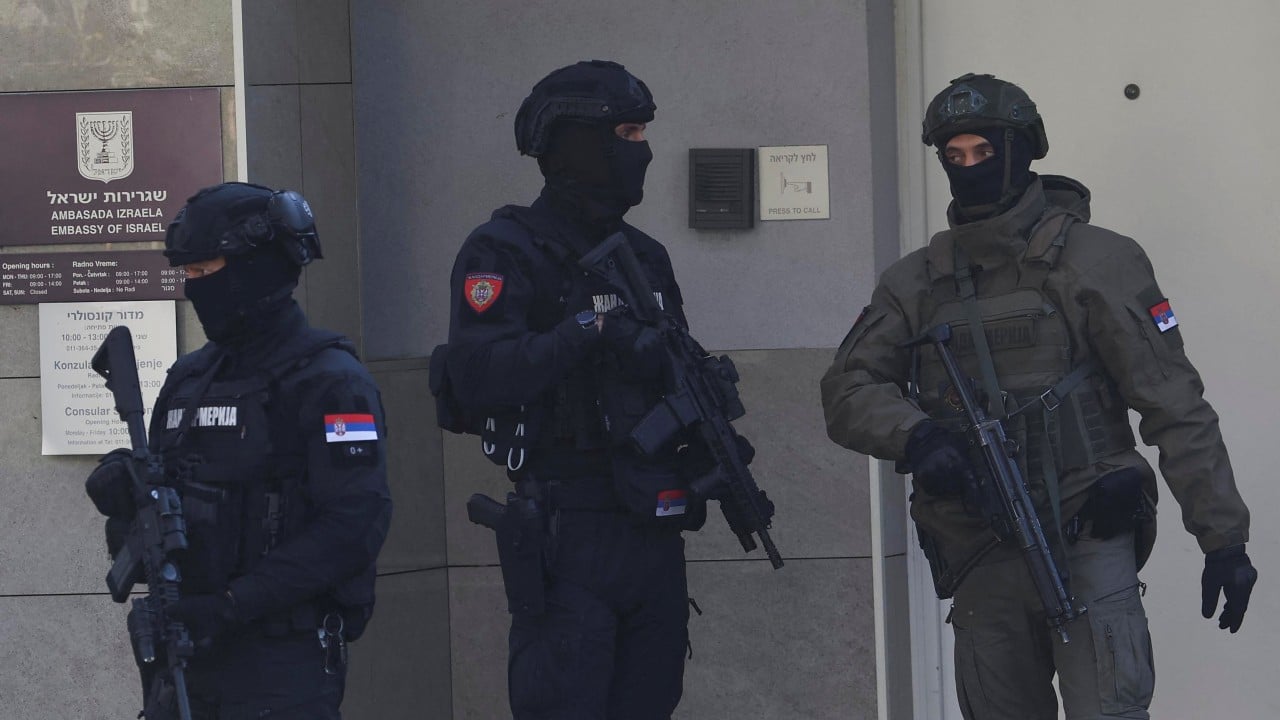
Another violent incident outside the Israeli embassy in Belgrade has left security officials scrambling for answers. A knife-wielding minor rushed a Gendarmerie officer stationed outside the diplomatic mission just after midnight, shouting religious slogans before being shot dead.
It's a chilling echo of past violence in the Serbian capital. The attack marks the second major security breach targeting the same diplomatic post in two years. Back in June 2024, a man armed with a crossbow seriously wounded a guard outside the exact same embassy before being killed.
Interior Minister Ivica Dačić confirmed that the latest assailant used two knives during the sudden rush. The officer on duty suffered light facial wounds and neutralized the attacker in self-defense. Security agencies quickly raised Serbia's threat level to red, triggering heightened patrols at critical infrastructure and crowded public spaces across the country.
The Broader Political Turbulence
Timing matters in geopolitics. This incident unfolded amid a fragile political vacuum in Belgrade. Serbia just wrapped up a chaotic parliamentary election that saw long-ruling political forces pushed out by a youth-led opposition movement after months of civil protests.
Because a new government hasn't been officially formed yet, outgoing security officials like Dačić are steering the crisis response. Meanwhile, Israel is dealing with its own fractured political landscape following recent parliamentary polls that yielded no clear governing majority.
Serbia maintains close ties with Israel, including defense cooperation and joint manufacturing projects. However, the incoming student-led political coalition has voiced stark opposition to current military export policies and vowed to pivot toward humanitarian aid for Palestinians. This sharp political shift creates an unpredictable backdrop for foreign missions operating in the region.
Unpacking the Threat Landscape
Security analysts aren't surprised by the heightened state of alert, but they are questioning intelligence gaps. Officials revealed that the teenage assailant had ties to extremist groups, specifically maintaining digital symbols associated with the Islamic State on social media.
When a minor manages to approach a heavily fortified diplomatic zone in an upscale district with dual blades, it exposes serious vulnerabilities. Elite police units armed with automatic weapons guard the Israeli embassy, which sits mere blocks away from the United States embassy. Yet, determined attackers keep finding ways to strike.
Serbia's government promises a zero-tolerance crackdown on radical networks. But ramping up red-alert security won't fix the underlying radicalization pipelines thriving online. Law enforcement agencies face immense pressure to dismantle local cells before copycat incidents turn deadly.
Diplomatic security in the Balkans faces a severe test. Authorities must balance open urban environments with fortress-style protection while navigating a turbulent domestic political transition.