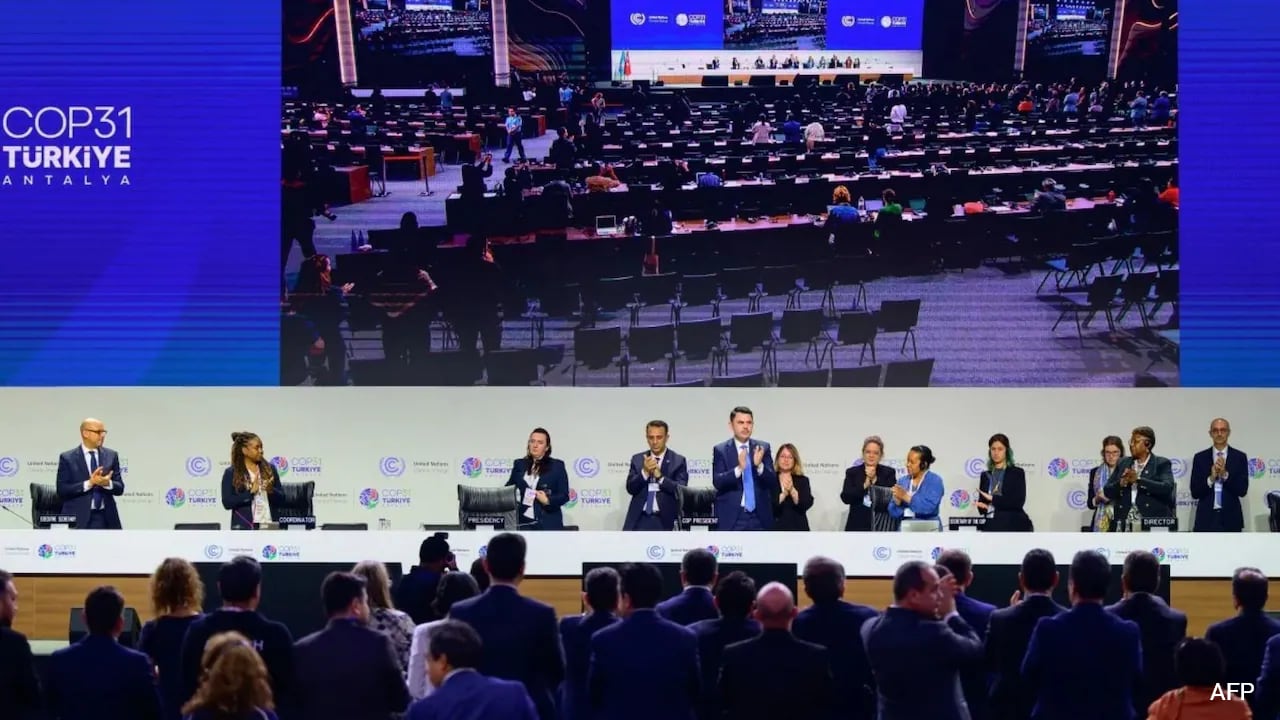
More than 49 hours past its scheduled finish in Antalya, COP31 didn't just run late. It broke down completely.
Almost 200 nations spent two grueling weeks in Turkey, plus two extra days of marathon overtime, only to walk away on November 22, 2026 without an overarching political deal. COP31 is now the longest UN climate summit in history. It's also a sobering reminder of how stuck global diplomacy gets when fossil fuel interests collide with climate reality.
If you're wondering why the talks imploded, here's the short version: oil-producing states refused to let the final text explicitly call for transitioning away from fossil fuels, while the European Union, the UK, and vulnerable island and developing nations refused to sign off on a watered-down "Antalya Pact" that dodged the root cause of global warming. Add bitter fights over climate finance, carbon capture, and even disputes spilling over around the work of the Intergovernmental Panel on Climate Change (IPCC), and the whole cover decision fell apart.
Honestly, watching nearly 200 countries burn two extra days arguing over phrasing while extreme weather keeps hammering real communities is exhausting. I've followed climate negotiations long enough to know that diplomatic brinkmanship is normal at COP summits. Still, Antalya felt sharper, angrier, and more exposed than usual. More analysis by The Guardian highlights related views on this issue.
Why COP31 Went Into Record Overtime and Still Failed
COP31 was officially scheduled to run from November 9 to November 20, 2026 at the Antalya Expo Center in Türkiye, as documented on the UN News coverage of COP31. Instead, delegates kept grinding until November 22 as negotiators tried to stitch together a compromise cover decision that wouldn't trigger a walkout.
The hosting setup itself was unusual before a single draft text even hit the table. Australia and Türkiye had both campaigned hard to host COP31—Australia with plans for Adelaide, and Türkiye pushing its own bid—before reaching a split compromise in November 2025. Under that arrangement, Turkish Environment Minister Murat Kurum served as COP31 President and oversaw the Action Agenda, while Australian Minister Chris Bowen chaired the formal negotiations. Even with that division of labor, consensus proved elusive.
Bowen pointed to "the most complicated and fraught geopolitical environment in living memory," noting how elevated energy prices and fallout from conflict in the Middle East hardened positions across the room. When energy security feels shaky, governments get jumpy. Some cling to existing oil, gas, and coal supply chains. Others push harder for clean power to escape price shocks. At COP31, those two instincts collided head-on.
When Kurum finally brought the gavel down more than 49 hours after the original deadline, there was no grand political pact to celebrate. A few individual negotiating tracks adopted decisions, sure. Yet the flagship political text—the Antalya Pact—failed to win consensus.
The Fossil Fuel Standoff That Broke the Antalya Pact
At the heart of the breakdown was a basic question that negotiators still can't agree to put in plain English: should global climate pacts explicitly name the transition away from fossil fuels?
Oil-producing nations—led in the public clash by Saudi Arabia—pushed back hard against explicit fossil fuel phase-out language and argued that climate policy should keep "all solutions on the table," including scaling up carbon capture, utilisation, and storage (CCUS) to gigatonne levels by 2035. For countries whose economies depend heavily on oil and gas exports, binding or explicit language targeting fossil fuels feels like an existential threat to state revenue and leverage.
Critics see that push very differently. For the EU, the UK, and climate-vulnerable states like Panama, Vanuatu, and the Marshall Islands, leaving fossil fuels out of the cover decision—or dressing up a weak text with a heavy bet on carbon capture—looked like backsliding. Irish Climate Minister Darragh O'Brien, speaking with the EU presidency in hand, made it plain that Brussels wouldn't endorse a cover decision that omitted fossil fuels, the primary driver of climate change, or greenwashed them. UK negotiator Kate Hughes went further, warning that the draft moved things backward on science and settled for a lowest common denominator.
The proposed electrification push didn't save the deal either. Hosts tried to rally backing around raising electricity's share of global final energy consumption to 35 percent by 2035. Yet as Down To Earth's analysis of the COP31 text pointed out, that target was stripped of explicit links to tripling renewable energy capacity and doubling annual energy-efficiency gains by 2030, leaving critics unconvinced it would force fast enough emissions cuts. Once objections piled up from multiple sides, the package collapsed.
Climate Finance, Equity, and the 1.5°C Overshoot Reality
Fossil fuels weren't the only fault line. Money and fairness ran straight through every room in Antalya.
Developing nations—including members of the Like-Minded Developing Countries (LMDC) group—kept hammering on equity and the principle of common but differentiated responsibilities and respective capabilities (CBDR-RC). In plain terms, countries that contributed a smaller share of historical greenhouse gas emissions and face brutal climate impacts argue they shouldn't be asked to shoulder heavy burdens without serious financial backing from wealthier nations. Demands such as a $120 billion climate finance goal vanished from the failed deal, and calls to triple adaptation finance by 2035 or tax windfall fossil fuel profits underscored just how wide the trust gap remains.
Meanwhile, the scientific backdrop keeps tightening the screws. Even the Antalya draft acknowledged that global temperatures are expected to overshoot 1.5°C above pre-industrial levels in the coming years as current emissions pledges fall short, while the remaining carbon budget shrinks fast and loss and damage climb with every fraction of a degree of warming.
UN Secretary-General António Guterres, who had urged governments to send fossil fuels "the way of the dinosaurs" and advance a Climate Justice Compact, stressed after the collapse that there is "no ambiguity in the science" even when diplomats can't find consensus. UN climate chief Simon Stiell put it bluntly too: the summit fell short, and the world can't afford repeats.
What People Get Wrong About a "Failed" COP
Whenever a climate summit ends without a headline agreement, two lazy reactions show up right away. One side cheers that climate alarmism hit a wall. The other side acts as if nothing in the real world is changing because diplomats couldn't agree on a communique.
Both miss what's actually happening.
First, a UN deadlock doesn't freeze clean energy economics or physical weather. Solar, wind, batteries, and grid electrification are moving forward in many markets because of falling costs, industrial policy, and energy security worries—not because a UN text used one verb instead of another. At the same time, roughly 60 countries had already joined a conference on phasing out fossil fuels earlier in 2026, and several governments brought their own national exit plans into the conversation.
Second, let's be honest about what COP summits actually do and don't do. They aren't world parliaments passing enforceable laws overnight. They're high-stakes forums where nearly 200 countries with wildly different economies, histories, and energy profiles negotiate by consensus. Because consensus gives veto power to holdouts, the final text often drifts toward the lowest common denominator. When negotiators refuse to sign a hollow compromise—as happened in Antalya—it exposes real divisions rather than hiding them behind diplomatic fog. That friction is painful, yet pretending fake unity exists is worse.
Still, there is a real risk here. Delays cost time, and time is the one resource the atmosphere doesn't negotiate on. Disputes over the IPCC's work and stalled finance commitments slow down coordination right when vulnerable regions need predictable funding for adaptation, early warning systems, and disaster recovery.
Where Things Go After Antalya
With COP31 in the books—and COP32 slated for Addis Ababa, Ethiopia in 2027—waiting around for a miracle in the next plenary hall is a bad strategy. Consensus diplomacy matters, especially for smaller nations that need multilateral rules and shared finance mechanisms, so walking away from the process entirely isn't realistic either.
What happens between now and Addis Ababa will tell us whether Antalya was a turning point or just another stall. If you want to track real progress instead of summit theater—or push for concrete action where you live or work—focus on a few practical moves right now:
- Watch national policies and grid buildouts, not just summit communiques. Track actual laws, coal or gas phase-out timelines, permitting reforms, and transmission investments in major emitting countries. Real emissions move on national policy and infrastructure, not UN press releases.
- Follow adaptation and loss-and-damage funding flows. Pay close attention to whether wealthy governments deliver real, accessible money for flood defenses, heat resilience, and early warning systems in climate-vulnerable regions rather than recycling old pledges.
- Audit corporate and local energy claims. If you run a business, advise clients, or shape local policy, don't treat vague net-zero pledges or unverified carbon offsets as a substitute for cutting direct emissions and electrifying operations cleanly.
- Press leaders for concrete domestic timelines. Whether you're talking to local officials, lawmakers, or company leadership, ask for specific dates, budgets, and measurable milestones—because general promises are easy to make and easy to drop when talks get tough.