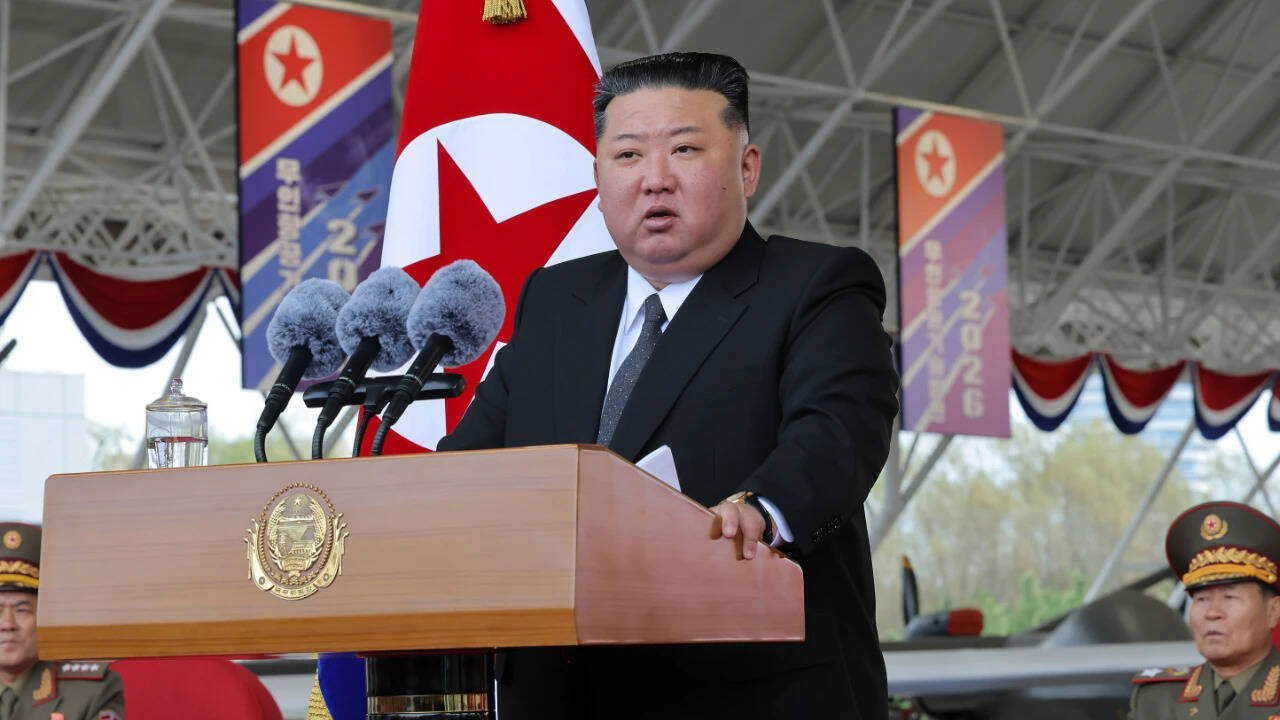
For decades, the official rhetoric coming out of Pyongyang rested on a single, stubborn premise: the Korean Peninsula was one nation wrongfully split in two, and eventual reunification was an absolute historical inevitability. Maps in classrooms featured the entire peninsula, and government documents constantly referenced brotherhood across the 38th parallel. That comforting fiction is officially dead.
When North Korea published the full text of its newly revised constitution via the propaganda portal Naenara, it did more than update administrative text. It permanently codified a bitter geopolitical reality. South Korea is now legally defined as a separate, hostile foreign state, and every constitutional reference to national reunification has been completely scrubbed away.
If you've been watching East Asian politics from the sidelines, you might be tempted to write this off as mere theater or another routine propaganda update. Don't. This constitutional overhaul marks a massive shift in how Pyongyang views its southern neighbor, its own borders, and its ultimate military doctrine.
Redrawing the Map and Erasing the Past
The most immediate change sits right in Article 2 of the revised constitutional document. North Korea now explicitly defines its territory as the land sharing borders with China and Russia to the north, and the Republic of Korea to the south.
By naming Seoul's government as an independent country rather than a temporary southern puppet or a fractured half of the same homeland, Kim Jong-un's regime has burned the diplomatic bridges of the past. The state-run media and legislative bodies at the Supreme People's Assembly didn't rush this out overnight. Pyongyang kept the updated constitutional text locked away and inaccessible online for more than two and a half years before finally releasing the full contents. South Korea's Ministry of Unification had already flagged similar language after securing leaked versions earlier, but seeing the official text out in the open removes any lingering ambiguity.
The reunification goal wasn't just a political talking point used during tense summits; it was embedded in the nation's foundational framework. Tearing it out means Pyongyang is openly preparing its domestic population for a permanent two-state reality—one where the neighbor across the border isn't a misplaced family member, but an entrenched enemy.
Consolidating Absolute Nuclear Control
It isn't just diplomacy and borders getting a makeover. The constitutional revisions also hand sweeping new powers directly to Kim Jong-un concerning the country's nuclear arsenal.
The amended text hardens the legal authority of the chairman of the State Affairs Commission, placing the entire nuclear forces network firmly under direct command. Crucially, the update allows Kim to delegate the power to use nuclear weapons to the state nuclear command organisation.
This isn't an accidental administrative tweak. Pyongyang wants zero bureaucratic friction if a crisis hits. By legally cementing control over atomic capabilities and streamlining the chain of command for deployment, the regime is signaling that its nuclear deterrent is ready for instantaneous use. It's a calculated message aimed straight at Seoul and Washington, proving that the North views its security environment through an increasingly paranoid and aggressive lens.
Why This Shift Matters Right Now
You have to look at the domestic side of this equation to understand why Pyongyang is making these radical moves. Dictatorships don't rewrite foundational laws on a whim. For years, younger generations of North Koreans grew up consuming foreign media smuggled across the border, noticing the stark economic contrast between their impoverished homeland and a hyper-modernized Seoul.
By legally declaring South Korea a completely separate foreign country, the regime can justify cracking down even harder on outside cultural influences. Consorting with media or ideas from a "hostile foreign state" carries a far harsher ideological weight than trading culture with misguided brothers in the south. It builds an impenetrable psychological wall to keep information out and absolute loyalty in.
The legal erasure of reunification also frees Pyongyang from the burden of pretending peace is the ultimate goal. When you drop the premise of a shared destiny, you no longer have to pretend that military buildups are defensive measures aimed at eventual reconciliation. You are simply two separate countries staring each other down across a heavily armed frontier.
The New Normal on the Peninsula
The diplomatic landscape in East Asia has entered a much colder, more volatile phase. The guardrails that kept inter-Korean tensions from completely spiraling out of control for decades relied heavily on the shared fiction that both sides ultimately wanted to patch things up.
With those guardrails gone, calculations in Seoul, Washington, and Tokyo have to adapt to a regime that views war as a conflict between sovereign adversaries rather than an internal civil dispute. There's no longer a diplomatic fallback option of returning to talks about peaceful coexistence rooted in shared heritage.
Keep your eyes on how military drills respond to these changes in the coming months. The legal groundwork for permanent hostility is laid. The peninsula has moved past the era of broken promises and is now operating under a chillingly clear framework of complete separation.