You can hear them from miles away. For decades, the border between North and South Korea has echoed with an audio war of attrition. Now, that acoustic battleground is roaring back to life.
Kim Yo-jong just made it clear that Pyongyang's massive propaganda loudspeakers are ready to restart along the entire demilitarized zone. If you think this is just another piece of empty posturing from North Korea, you aren't paying attention to how fast relations have disintegrated over the past year. Seoul dismantled its own speakers back in August 2025 as a goodwill gesture under President Lee Jae Myung, hoping to cool down the peninsula. That peace offering didn't age well.
Right now, the geopolitical math on the Korean peninsula is shifting toward open hostility, and the return of high-decibel psychological warfare marks a dangerous escalation in a region that has spent 2026 walking a very thin tightrope.
The Anatomy of Acoustic Warfare
Sound carries across the 250-kilometer military demarcation line with terrifying clarity. When both sides turn their massive arrays on, the noise dominates everything else.
If you've never looked into how these border broadcasts operate, the contrast is stark. South Korea historically weaponized pop culture, broadcasting chart-topping K-pop tracks, weather updates, and uncensored global news reports across the border to demoralize young North Korean conscripts. Pyongyang's playbook is entirely different. They rely on bone-rattling audio assaults—haunting, distorted animal howls, apocalyptic static, and endless ideological lectures designed to wear down the psychological stamina of South Korean troops stationed at guard posts.
When President Lee Jae Myung halted the southern broadcasts in June 2025 and had the physical hardware dismantled two months later, Seoul wanted to step off the escalation treadmill. It worked for about a year. But border flashpoints don't stay quiet for long when mutual trust hits zero.
What Triggered This Latest Crisis
You can trace the current breakdown straight back to a violent incident in September 2026. A landmine blast south of the military demarcation line severely injured three South Korean soldiers, costing two of them their limbs.
Seoul and the United Nations Command investigated the wreckage, pinned the blame squarely on a North Korean anti-personnel mine, and labeled it a blatant armistice violation. Pyongyang predictably dismissed the findings as a staged farce, denying any involvement whatsoever.
At the same time, North Korea has been physically sealing its border with an intensity not seen in generations. Ever since Kim Jong-un formally abandoned reunification goals and declared the two Koreas to be hostile separate states in December 2023, engineering crews have been busy. They've laid thousands of mines, strung up heavy barbed wire, and thrown up concrete anti-tank barriers.
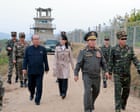
When Kim Yo-jong inspected those frontline fortifications alongside senior military adviser Pak Jong-chon, she didn't mince words. She called the border a permanent line never to be crossed. South Korean military intelligence reported that engineering teams frequently crossed the demarcation line during construction, forcing southern troops to fire warning shots and scream warnings through makeshift megaphones—actions that Pyongyang immediately labeled armed provocations.
The Response From Seoul
Seoul is now caught in a strategic corner. Defense ministry officials have already stated that if North Korea flips the switch on its loudspeakers, a proportional response is inevitable.
Yet, the government in Seoul is hesitant to rush back into a childish megaphone shouting match that only ratchets up civilian anxiety near the border. Residents in Yeoncheon and Paju remember the ear-splitting noise from previous standoffs. They don't want a repeat of the audio torture that kept entire towns awake at night.
The danger isn't just the noise. Loudspeakers are a symptom of a much deeper institutional fracture. When direct communication channels close and physical barriers harden, psychological operations become the primary vehicle for political signaling. Every decibel pumped across the border signals a further retreat from diplomacy.
Where This Leaves Us
The return of North Korea's propaganda loudspeakers signals the official burial of the brief thaw we saw in 2025. With Pyongyang locking down its territory as a permanent fortress and Seoul preparing for reciprocal measures, the border is turning back into a Cold War relic on steroids.
Keep your eyes on the frontier over the coming weeks. Once those speakers start blaring across the hills, walking back down from the ledge will become nearly impossible.