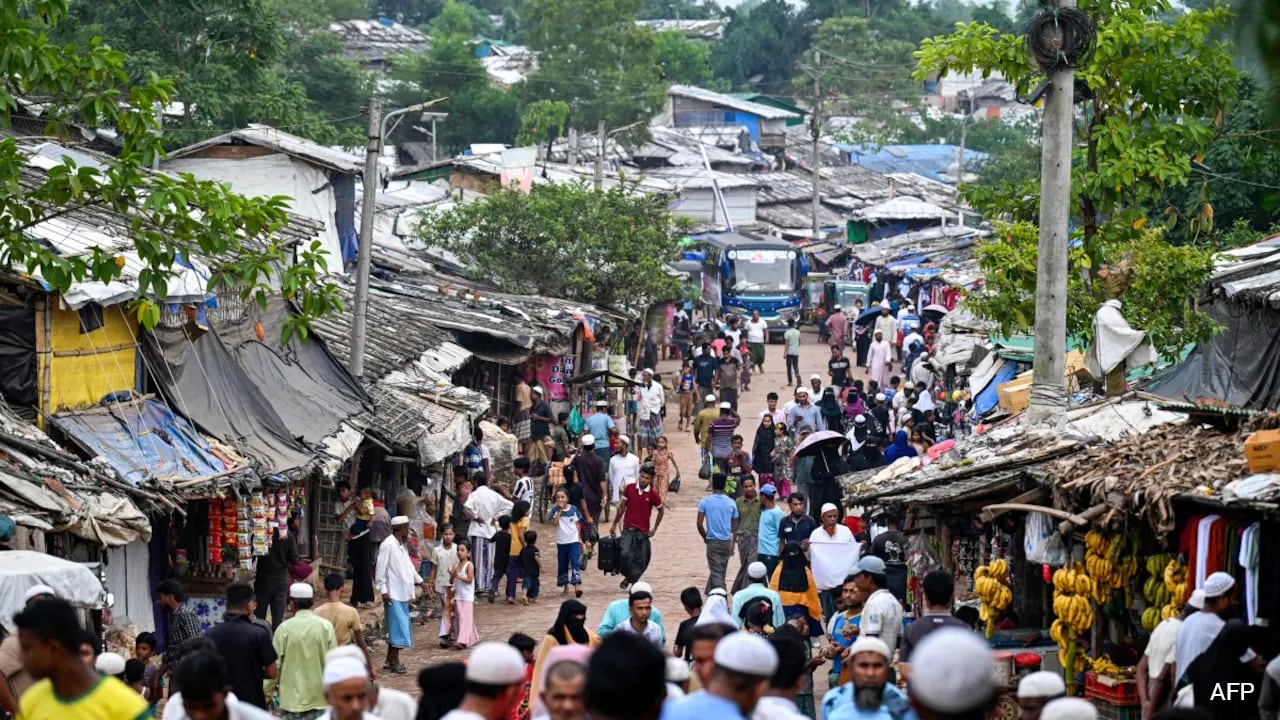
Over one million people are holding their breath inside the crowded tents of Cox's Bazar. Years of waiting are coming down to a single moment.
The International Court of Justice is handing down its long-awaited decision on whether Myanmar’s military committed genocide against the Rohingya minority. This isn't just another legal footnote from The Hague. It's a massive stress test for international law, carrying heavy implications for ongoing global disputes, including South Africa's separate case accusing Israel of genocide in Gaza.
Proving genocide in an international court is notoriously difficult. Prosecutors don't just have to show that atrocities occurred. They have to clear the highest legal hurdle in existence: proving the actual specific intent to destroy an ethnic group in whole or in part. Since the horrors of the 20th century, international tribunals have only crossed that line in a tiny handful of cases, such as Rwanda, Srebrenica, and Cambodia.
The Long Road From 2017 to The Hague
Back in 2017, a brutal military offensive drove at least 730,000 Muslim Rohingya out of Buddhist-majority Myanmar. Survivors flooded across the border into Bangladesh, bringing harrowing eyewitness accounts of mass killings, widespread sexual violence, and entire villages burned to the ground.
Instead of waiting for superpowers to act, Gambia filed a landmark case against Myanmar at the ICJ under the 1948 Genocide Convention. It was an unconventional move by a small West African nation, but it forced the world's highest court to confront state responsibility head-on. Myanmar’s military-backed leadership has consistently denied the charges, claiming their forces were merely carrying out legitimate counter-terrorism operations against armed insurgents.
The Enforcement Problem Everyone Ignores
Let's be completely realistic about how this works. ICJ rulings are technically final and binding, but the court has virtually no police force or enforcement mechanism.
If the judges rule against Myanmar, the junta isn't going to hand themselves over or automatically pay billions in reparations. The military government can simply ignore the verdict, just as other nations have done when faced with unfavorable international judgments.
So why does this case matter so much?
Because the real power of an ICJ ruling lies in diplomatic isolation, economic pressure, and historical record-keeping. A definitive legal finding of genocide strips away any remaining diplomatic cover for Myanmar's military rulers. It changes how international corporations trade, how neighboring Asian nations handle diplomacy, and how future international tribunals handle similar state-sponsored atrocities.
Why This Ruling Echoes Far Beyond Myanmar
Legal scholars across the globe are combing through this case for clues on how the fifteen-member bench evaluates state responsibility. The 1948 Genocide Convention hasn't seen a major state-level application of this magnitude in over a decade.
When the court defines how evidence of mass violence translates into legal proof of genocidal intent, that standard immediately becomes the blueprint for every future human rights case. What happens in The Hague today shapes the legal battlefield for conflicts spanning multiple continents.
For the refugees stuck in Bangladesh, a legal victory won't instantly rebuild a burnt village or bring back lost family members. But it validates their survival. It puts an official judicial stamp on truth, refusing to let state-sponsored violence vanish into the archives of history.