For eighty years, the world's top court has danced around the hardest word in international law. On November 19, 2026, the International Court of Justice finally said it out loud. Myanmar committed genocide against the Rohingya.
In a 9–6 decision read out in The Hague by Court President Yuji Iwasawa, judges ruled that Myanmar's security forces acted with intent to destroy a substantial part of the Rohingya population in northern Rakhine State during the brutal 2016–2017 clearance operations. It is the first time in the ICJ's eight-decade history that it has held a state responsible for genocide under the 1948 Genocide Convention.
A lot of coverage treats this verdict like a magic gavel that instantly rights old wrongs. Honestly, it isn't. A judgment on paper doesn't rebuild burned villages overnight, and it doesn't hand a passport back to someone living under a tarpaulin in Bangladesh. Still, calling this a routine diplomatic milestone misses how much just shifted under other pending cases.
What the Rohingya genocide ruling actually proves
Most headlines focus on the headline label, yet the legal reasoning behind it is where the real teeth sit. Under the 1948 Genocide Convention, proving genocide requires more than mass killings, arson, or cruel displacement. Judges have to find dolus specialis—specific intent to destroy a protected group, in whole or in part.
For years, defenders of military campaigns have leaned on a convenient shield. They argue soldiers were fighting insurgents, clearing hostile terrain, or conducting counter-terrorism operations. Here, Myanmar claimed its operations targeted militants. The ICJ looked at the scale and pattern of what happened instead.
According to the court's findings, security forces killed roughly 10,000 Rohingya civilians, carried out widespread sexual violence, inflicted extreme violence against children, razed villages, and attacked people as they fled. Judges concluded that the pattern went far beyond military necessity and left genocidal intent as the only reasonable inference.
There's another detail legal scholars are already circling. The court stressed that compliance with international humanitarian law—the rules governing armed conflict—does not automatically immunize a state from genocide liability. Those are distinct legal regimes with different aims. If you rely on "we were just fighting militants" as a blanket defense, this judgment makes that argument much harder to sell.
How a small West African state got the court here
If you ever wondered whether smaller nations can move mountains in international law, look at The Gambia. Back in 2019, The Gambia filed the case against Myanmar with backing from the Organisation of Islamic Cooperation.
Why The Gambia? Because the Genocide Convention treats obligations to prevent and punish genocide as erga omnes—duties owed to the international community as a whole, not just to neighboring states. You don't need your own border shelled or your own citizens massacred to walk into The Hague and demand accountability.
"It is not about esoteric issues of international law. It is about real people, real stories and a real group of human beings." — Dawda Jallow, The Gambia's justice minister, addressing the court
That point matters. Too often, people assume international justice is a closed club reserved for great powers when it suits them. The Gambia's filing proved a weaker state with strong legal preparation—and intervention support from countries like Canada, France, Germany, the Netherlands, and the United Kingdom—can force a superpower-backed military regime onto the defensive for seven years.
What happens to the 1.2 million refugees right now
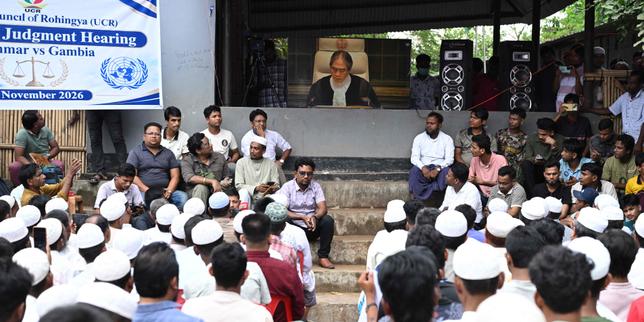
Legal victories feel abstract until you picture Cox's Bazar. Roughly 1.2 million Rohingya refugees live in Bangladesh, many crammed into sprawling settlements where fire hazards, monsoon landslides, disease outbreaks, tight living quarters, and work restrictions are daily realities.
For survivors who followed the verdict from camps or traveled to The Hague, the emotional weight is huge. Being called a victim of genocide by the UN's highest court isn't a small thing when your identity, history, and humanity have been denied for decades.
At the same time, let's be realistic about enforcement. The ICJ doesn't have a police force or an army to march into Rakhine State. The court ordered Myanmar to:
- Cease ongoing violations and prevent future genocidal acts
- Investigate, prosecute, and punish perpetrators
- Allow the safe, voluntary, and dignified return of displaced Rohingya to their homes
- Restore or replace lost or damaged property, provide physical and psychological rehabilitation, and pay compensation
Myanmar was given two years to report back on restitution measures, with compensation amounts and details set for a later phase. In reality, compliance from Myanmar's military-backed authorities won't happen out of goodwill. It will take sustained diplomatic pressure, targeted sanctions, UN Security Council action where possible, and concrete funding for humanitarian relief—especially after severe food ration cuts hit camps in recent years.
Common myths and blind spots after the verdict
Whenever a major court ruling drops, three misconceptions show up right away. Clearing them up saves a lot of confusion.
First, people confuse the ICJ with the International Criminal Court. The ICJ decides disputes between states—in this case, The Gambia versus Myanmar. It doesn't sentence individual generals to prison cells. Individual criminal accountability belongs to separate mechanisms, including the ICC and domestic or universal jurisdiction prosecutions elsewhere.
Second, some readers assume the court had a complete look inside Myanmar. Judge Iwasawa noted that Myanmar failed genuinely to investigate atrocities and refused access to evidence, witnesses, and requested information inside the country. That obstruction is part of the record, and it shows how hard-won these findings were despite stonewalling.
Third, don't assume this ruling automatically decides other high-profile ICJ cases. Every genocide case turns on its own facts, context, and evidence of intent. Still, legal analysts already see ripples for other conflicts before the court, because the standard for inferring intent from patterns of destruction and rejecting "counter-operation" excuses just got sharper.
Practical next steps if you want to help or follow closely
If you're reading this because you care about accountability, human rights, or Southeast Asian geopolitics, don't stop at a headline share. A few concrete moves actually matter:
- Back verified aid and legal documentation: Support established humanitarian groups operating in Cox's Bazar and organizations documenting atrocities and supporting survivors, rather than unverified social media fundraisers.
- Read the court's actual findings, not just summaries: Look up the ICJ's The Gambia v. Myanmar judgment details and reports from groups like Human Rights Watch or PBS NewsHour to see how judges weighed intent and remedies.
- Watch the two-year restitution clock and diplomatic responses: Track whether governments back up the verdict with real diplomatic pressure, refugee protection, and resettlement or repatriation safeguards—because a ruling is only as strong as the states willing to enforce its spirit.