Why a $14.995 Million Asking Price on a 1992 House Raises Real Questions
Warren Beatty and Annette Bening sold their Beverly Hills home for $6.7 million in 2012, and now that renovated Mulholland Drive estate is back on the market for $14.995 million.
On paper, that jump looks like effortless Hollywood magic. A famous couple builds a Mediterranean-style home in 1992 right around the time they marry, raises four kids there, sells it in 2012, and over a decade later someone asks more than double the old price after a $5 million renovation.
Honestly, though, I look at numbers like that and get skeptical right away. Celebrity pedigree gets people through the gate, sure. It makes for great dinner-party chatter and glossy magazine spreads. Still, rich buyers in the Beverly Hills Post Office and Mulholland corridor don't write $15 million checks just because Warren Beatty once walked down the hall. They look at lot size, privacy, renovation quality, and whether the math holds up when transaction costs and carrying expenses enter the picture.
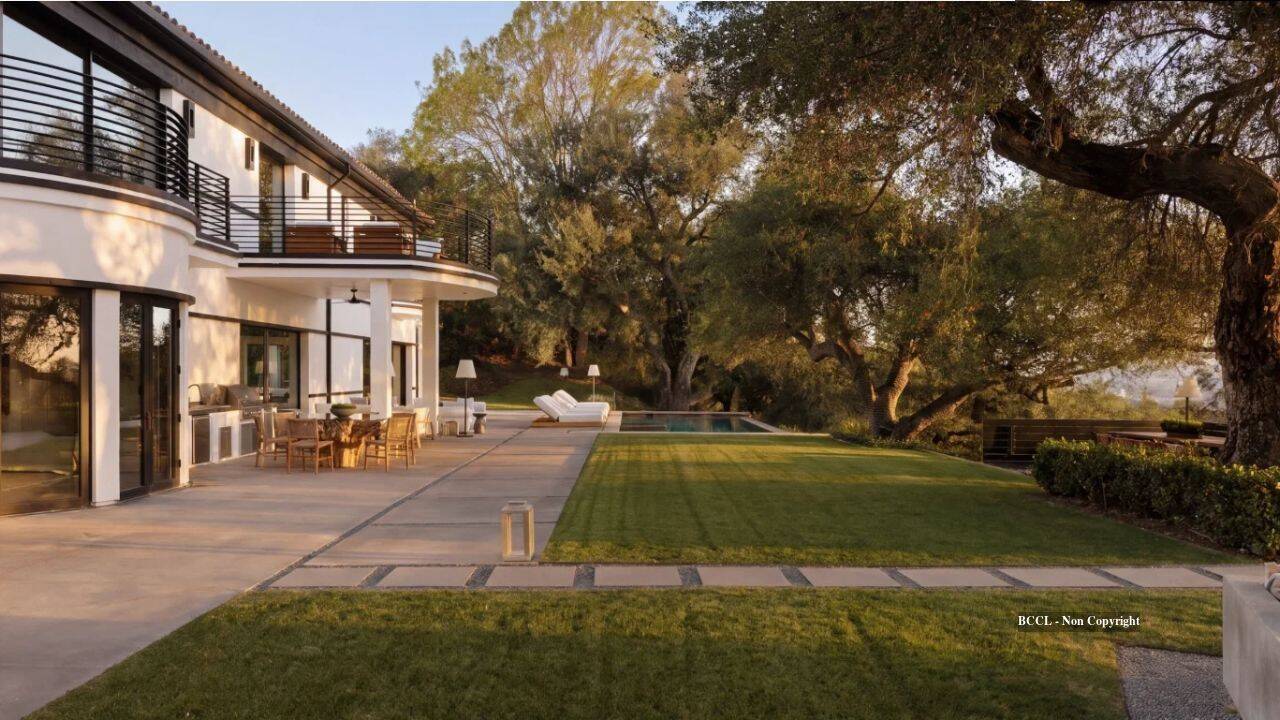
Let's be clear about what we actually know and what's worth watching here. Publicly reported real estate coverage around the listing points to a 1992 build on roughly 1.11 acres along Mulholland Drive in the 90210 area, a 2012 sale at $6.7 million, and a major remodel reported around $5 million that added modern finishes and screening spaces. Whenever a property leaps from $6.7 million to $14.995 million over fourteen years while absorbing a $5 million renovation, the real story isn't just nostalgia. It's how luxury real estate math works when time, celebrity history, and construction budgets collide.
The Timeline Behind the Mulholland Drive Property
Every good real estate story has a timeline that explains why a price feels reasonable or slightly stretched.
In 1992, Beatty and Bening built the home from the ground up, the same year they married after meeting on Bugsy. At that stage in their lives, they were starting a marriage and raising a growing family—four children in total—rather than buying a quick flip. Families with young kids care about gated privacy, outdoor space, and room to breathe. A roughly 1.11-acre parcel off Mulholland Drive gives you separation from street noise and room for an estate footprint that feels tucked away.
Twenty years later, in 2012, they parted ways with the house for $6.7 million. That number matters because 2012 sat much closer to the post-2008 housing recovery than today's high-dollar luxury market. A $6.7 million sale back then wasn't a fire sale, nor was it the ceiling of what a large, gated Los Angeles property could eventually command.
Then came the next chapter: a subsequent buyer took on a reported $5 million renovation, modernizing the interior and leaning into entertainment and screening features that nod to Beatty's film legacy. Now, listed at $14.995 million, the asking price sits $8.295 million above that 2012 sale price—an increase of roughly 123.8% over fourteen years.
If you do rough back-of-the-envelope math, $6.7 million plus $5 million in renovation equals $11.7 million before factoring in closing costs, property taxes, insurance, maintenance, or financing over more than a decade. An asking price of $14.995 million leaves roughly $3.295 million of gross spread above the sum of the 2012 sale price and the reported renovation cost.
That isn't a windfall. In high-end Los Angeles real estate, carrying a big property for years while paying contractors, architects, permits, and holding costs eats into margins fast. Sometimes sellers price high to test demand or leave room for negotiation. Sometimes the market agrees. Sometimes it doesn't.
Celebrity Pedigree vs. Real Estate Fundamentals
Here's a misconception I see constantly: people assume a famous former owner automatically adds millions in permanent value.
Sometimes it helps at the margin. A screening room or theater space feels a little cooler when the original owner was an Oscar-winning actor and director who helped shape modern Hollywood. Buyers who love cinema history appreciate that connection, especially when a renovation respects the spirit of the place rather than wiping out every trace of its past.
Yet celebrity gloss wears off quickly once a buyer starts thinking about daily life.
In luxury neighborhoods around Beverly Hills and Mulholland Drive, serious buyers weigh concrete fundamentals:
- Lot usability and privacy: A 1.11-acre parcel sounds generous, and it is compared to standard suburban lots, but hillside topography, setbacks, and driveway grades determine how much flat, usable yard you actually get.
- Architectural coherence: Blending a 1992 Mediterranean build with contemporary minimalist or sleek entertainment updates only works if the transitions feel intentional. If a room looks like an afterthought bolted onto an older shell, sharp buyers spot it immediately.
- Turnkey readiness: Industry commentary on the Beverly Hills market—such as strategic market guides from local brokerage perspectives like Ray Lyon Realty—frequently highlights how heavily upper-tier buyers favor move-in-ready homes over major construction headaches. Nobody wants to spend two years chasing permits after already spending eight figures.
- Transaction friction: High-value California deals carry substantial transfer taxes, brokerage fees, and ongoing carrying costs that shrink net returns even when headline prices climb.
I've watched plenty of listings lean heavily on a famous name while ignoring layout quirks or dated bones. A big name gets clicks. Good bones and smart execution get offers.
What a $5 Million Renovation Actually Buys at This Level
People hear "$5 million renovation" and picture solid gold faucets and marble imported by helicopter. In reality, high-end residential construction in Los Angeles burns through cash way faster than outsiders expect.
When you remodel a large, older estate—especially one built in the early 1990s—a big chunk of the budget goes to things you never see in listing photos. Plumbing lines, electrical capacity, HVAC zoning, drainage, waterproofing, and structural or permitting work can swallow huge sums before a single designer tile goes up.
Then come the visible upgrades. Redoing kitchens with custom cabinetry and commercial-grade appliances, overhauling primary and guest baths, upgrading glazing and lighting, refreshing outdoor living areas, and building out dedicated screening or media spaces easily run into millions when labor and materials are priced for top-tier residential work. Cost tracking from sources like RubyHome and builders specializing in the area, such as Romano Builders, underscores how expensive major kitchen, bath, and structural updates have become—and why big remodels rarely return 100% dollar-for-dollar on paper unless the underlying property was under-improved for its neighborhood.
That's why looking strictly at "before and after" numbers can mislead you. A $5 million renovation isn't magic pixie dust that turns a $6.7 million house into a $15 million house overnight. Often, it's what's required just to bring a 30-year-old house up to current expectations so it can compete in today's market.
Is $14.995 Million Realistic or Aspirational?
Asking price is just the opening bid in a conversation between a seller and the market.
At $14.995 million, this property is competing against other heavily renovated, gated homes in prime Los Angeles and Beverly Hills pockets. At that tier, buyers have choices. They can compare architectural styles, view corridors, privacy levels, security setups, and how recently the mechanical systems were updated.
If the renovation was executed cleanly and the estate feels genuinely cohesive, the listing price frames it as a premier, turnkey residence with a memorable backstory. If buyers feel the asking price stretches ahead of comparable sales or leaves too little room for final tweaks, negotiations—or a longer time on the market—usually follow.
One thing is certain: the 2012 price of $6.7 million belongs to a very different moment. Comparing today's asking price straight against a sale from fourteen years ago is useful context, not a verdict on value by itself.
Smart Takeaways If You're Tracking Celebrity or Luxury Listings
Even if you aren't shopping for a $15 million estate off Mulholland Drive, stories like this teach a few sharp lessons about how to read luxury real estate news:
- Separate headline price from net profit. Add the prior purchase price to realistic renovation costs and holding expenses before assuming someone walked away with a massive windfall.
- Look past the famous name. Ask whether the house works on its own merits—location, privacy, layout, and condition—without the celebrity label attached.
- Check the age of the build and the remodel. A 1992 home renovated years ago is still a 1992 structure underneath; mechanical age and build quality matter just as much as finishes.
- Watch asking vs. closing. An asking price of $14.995 million is a starting point, not proof of what a buyer will actually pay at the closing table.