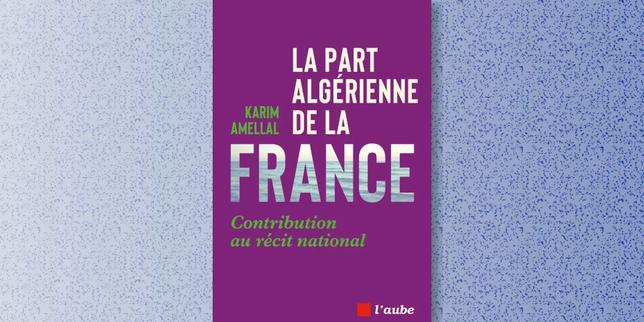
We love to pretend that borders are clean lines. History never cooperates. When essayist and former diplomat Karim Amellal published La part algérienne de la France through Éditions de l'Aube, he didn't just write another academic reflection on colonial memory. He threw a mirror right in front of a nation that constantly argues about identity while refusing to look at its own reflection.
If you think the relationship between France and Algeria is strictly a matter of foreign policy or dusty archival trauma, you are missing the entire point. It is domestic. It runs through families, language, music, food, and the daily friction of urban life. Let's talk about why this cultural hybridity terrifies the political class, and why it's time to face reality.
The Myth of External Separation
Politicians love to talk about immigration and foreign relations as if the other side of the Mediterranean is a distant planet. Amellal's core argument cuts straight through that illusion. Algeria isn't an external reality for France; it's an intimate part of its modern fabric.
Think about how we construct the national narrative. We sanitize it. We keep history neatly boxed up in school textbooks, as if the Algerian War and its aftermath didn't fundamentally shape modern French institutions, policing, urban segregation, and cultural expression. When millions of citizens carry dual heritage or family trees rooted in both sides of the sea, the border exists only in political speeches.
[ French National Narrative ] ──> Traditionally sanitized & homogenous
          vs.
[ Intimate Reality ] ──────────> Deeply hybrid, lived, and inseparable
Most public debates fail because they treat this connection as a pathology rather than an engine of creativity. Writers, artists, athletes, and everyday citizens live this hybrid reality effortlessly. Yet, institutions lag decades behind.
Why Political Discourse Stays Stuck in the Past
Every election cycle features the same tired panic over identity. Why? Because the trauma of decolonization remains one of the primary matrices for populist and right-wing rhetoric in France. It's an easy button to push. Whenever economic anxiety rises, politicians drag out old ghosts to score cheap points.
Amellal knows this landscape intimately. Having served as ambassador for the Mediterranean and taught at Sciences Po, he watches the dialogue bounce between denial and hysteria.
- The right treats the Algerian connection as a permanent threat to civic assimilation.
- Parts of the left sometimes reduce the relationship entirely to eternal grievance.
Both approaches miss what is actually happening on the ground. People aren't waiting for politicians to authorize their identities. They are already living a rich, complex synthesis that borrows freely from both cultures.
The Living Proof in Culture and Everyday Life
You can hear this hybridity everywhere. In contemporary literature, hip-hop, gastronomy, and everyday slang, the cultural exchange is constant and fluid. It's not about choosing a side. It's about a dual inheritance that creates something entirely new.
When you look at creators like Louisa Yousfi or historians like Benjamin Stora, a clear pattern emerges. The cultural output born from this shared history is among the most vibrant in Europe. Yet, cultural institutions often treat these voices as exotic exceptions rather than the mainstream heartbeat they actually represent.
Refusing to acknowledge this intimacy creates a permanent cultural friction. Kids growing up in French suburbs absorb contradictory messages daily: they are told they belong, yet their heritage is constantly pathologized in prime-time talk shows.
Moving Past Denial
Denial has an expiration date. Ignoring the Algerian component of French identity doesn't make it disappear; it just makes the public conversation more toxic.
If France wants to fix its chronic identity crisis, the first step is simple. Stop treating shared history as a wound that refuses to heal, and start seeing it as a foundation for the future. Read Amellal's book not as a provocation, but as a roadmap for maturity.
Accept that nations change. Cultures merge, mutate, and evolve whether politicians approve or not. The sooner we embrace that truth, the sooner we can stop fighting imaginary culture wars and start building a society that actually matches reality.